Disconnected by Design: How EHR Fragmentation Is Silently Compromising Patient Safety Across the US
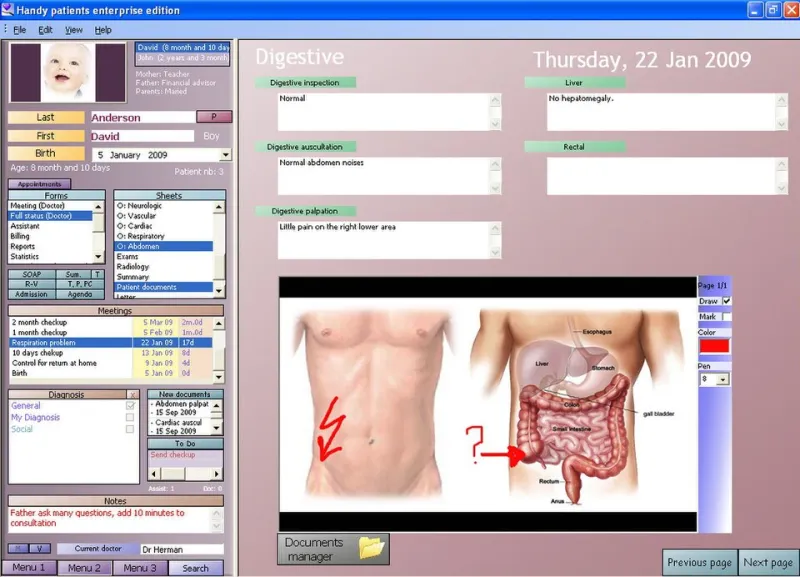
Photo: Unknown, GPL, via Wikimedia Commons
When a 64-year-old diabetic patient arrives at a Chicago emergency department having recently been discharged from a suburban hospital using a different electronic health record platform, the attending physician faces a familiar and troubling dilemma: they are, in practical terms, treating a stranger. Medication lists may be incomplete. Allergy flags may be absent. Recent laboratory values and imaging results exist somewhere in the digital ecosystem—but not here, not now, and not in a format that can be retrieved within the narrow window of an acute clinical encounter.
This is not an edge case. It is the structural reality of health information management in the United States, where the promise of the digital health record has been fundamentally undermined by a marketplace that rewards proprietary architecture over clinical utility.
A Market Built on Incompatibility
The Health Information Technology for Economic and Clinical Health (HITECH) Act of 2009 accelerated EHR adoption across American healthcare institutions, deploying approximately $35 billion in federal incentives to digitize patient records. By 2017, nearly 90 percent of non-federal acute care hospitals had adopted certified EHR technology. What the legislation did not adequately anticipate was the commercial incentive for vendors to construct systems that communicated poorly—or not at all—with competing platforms.
Epic, Oracle Health (formerly Cerner), and Meditech collectively dominate the inpatient EHR market. While each vendor has developed internal interoperability tools that function elegantly within their own ecosystems, cross-platform data exchange remains inconsistent, technically burdensome, and frequently incomplete. The Office of the National Coordinator for Health Information Technology (ONC) has acknowledged the persistence of what it terms "information blocking," a practice in which vendors or providers engage in conduct that interferes with the access, exchange, or use of electronic health information.
Despite the 21st Century Cures Act of 2016 explicitly prohibiting information blocking and mandating FHIR-based application programming interfaces, enforcement has been uneven. Penalties have been slow to materialize, and the technical standards required to operationalize genuine interoperability remain contested across the industry.
Where Silos Become Safety Failures
The clinical consequences of this fragmentation are neither theoretical nor rare. A 2022 analysis published in the Journal of the American Medical Informatics Association found that clinicians at receiving institutions were unable to access relevant prior records in approximately one-third of care transitions studied—a gap that correlated with increased rates of redundant testing, delayed diagnosis, and preventable adverse drug events.
Consider the pharmacological dimension alone. The United States has no unified national medication history database. When a patient fills prescriptions across multiple pharmacy chains, receives samples from a specialist, and obtains a mail-order supply from a pharmacy benefits manager, no single EHR system has reliable visibility into the full picture. A hospitalist prescribing anticoagulation therapy may be unaware that the patient's cardiologist initiated a course of treatment two weeks prior. The result is not a documentation failure—it is a systems design failure with dose-dependent consequences.
Similarly, allergic reaction histories documented in one institution's EHR frequently fail to migrate when patients seek care elsewhere. A 2019 report from the ECRI Institute identified incomplete allergy documentation as a recurring contributing factor in adverse drug event analyses, noting that fragmented records routinely stripped clinicians of information that would have altered prescribing decisions.
The Financial Architecture of Disconnection
Understanding why interoperability has advanced so slowly requires acknowledging that data, in the contemporary healthcare economy, functions as a competitive asset. Health systems that have invested substantially in Epic installations have limited financial motivation to facilitate frictionless data export to a rival institution operating on a different platform. Patient data portability, paradoxically, threatens institutional loyalty—and, by extension, revenue.
Vendors have historically monetized interfaces, charging per-connection fees that make broad interoperability prohibitively expensive for smaller community hospitals and federally qualified health centers. These institutions, which disproportionately serve rural and low-income populations, are consequently the most isolated nodes in an already fragmented network—a disparity that compounds existing health equity concerns.
The financial barriers extend to implementation as well. Integrating FHIR-compliant APIs into legacy systems requires sustained technical investment that many resource-constrained organizations cannot readily mobilize. The gap between regulatory mandate and operational reality is therefore widest precisely where clinical need is greatest.
Regulatory Momentum and Its Limitations
Federal regulators have not been passive. The ONC's Interoperability and Patient Access final rule, effective in 2021, established requirements for patient data access through standardized APIs and created formal mechanisms for reporting information blocking. The Centers for Medicare and Medicaid Services has linked interoperability compliance to participation in value-based care programs, applying financial pressure to incentivize cooperation.
Yet clinicians on the front lines report that progress remains incremental. The Trusted Exchange Framework and Common Agreement (TEFCA), launched in 2022 as a voluntary framework for nationwide health information exchange, has attracted participation from major networks but has not yet achieved the breadth or reliability necessary to constitute a functional national infrastructure.
Critically, the standards themselves—while technically sound—do not resolve the question of data quality. A record transmitted via FHIR that contains incomplete medication reconciliation or inaccurate problem lists does not become clinically reliable simply because it arrived through a compliant interface. Interoperability without data integrity is an incomplete solution.
Toward a Patient-Centered Information Architecture
The path forward requires confronting the fundamental misalignment between how EHR markets are structured and what clinical practice demands. Several reform directions merit serious consideration within the research and policy communities.
First, enforcement of existing information blocking prohibitions must be materially strengthened. The ONC and Federal Trade Commission have the authority to impose significant penalties; deploying that authority consistently would alter the cost-benefit calculus for vendors currently inclined toward proprietary data retention.
Second, federal procurement standards for EHR systems used in Medicare and Medicaid-participating institutions should explicitly condition certification on demonstrated cross-platform interoperability performance—not merely on API availability, but on documented, audited data exchange outcomes.
Third, the research community has a direct stake in this question. Clinical trial recruitment, pharmacovigilance, and real-world evidence generation all depend on the quality and completeness of EHR data. Fragmented records do not merely harm individual patients; they degrade the evidentiary substrate on which clinical science depends. Research institutions should advocate for interoperability not only as a care quality issue but as a foundational requirement for the integrity of clinical investigation.
The electronic health record was conceived as an instrument of continuity—a mechanism for ensuring that what is known about a patient follows that patient through the healthcare system. In its current fragmented state, it frequently functions as the opposite: a series of disconnected snapshots that collectively obscure as much as they reveal. Closing that gap is not a technical challenge awaiting a technical solution. It is a policy and governance challenge awaiting the institutional will to prioritize patient safety over market position.